

Pull down the menu to see the list of items
Deafness or hearing loss is a change that affects many people, mainly older adults. It is estimated that one in three people over the age of 65 have severe hearing difficulties.
In children, hearing loss has a major impact on their development and ability to learn.
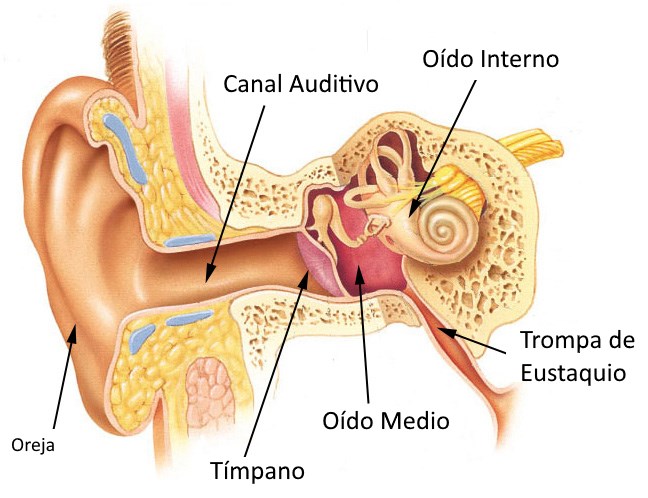
In hearing, sound waves reaching our ears are amplified as they pass through the external auditory canal, the tympanic membrane and the ossicles, and then converted into electrical impulses that are transmitted via the auditory nerve to the brain.
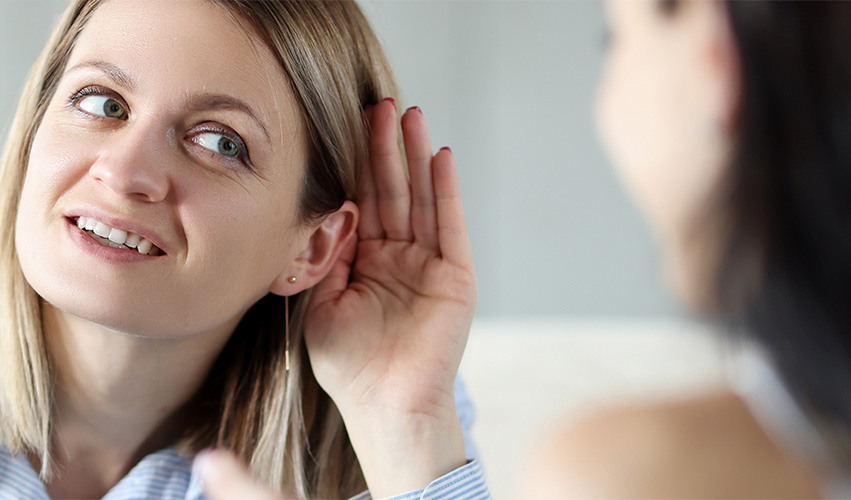
The causes of hearing loss are manifold.
- Difficulty in propagating sound waves to the auditory nerve due to the external auditory canal, tympanic membrane or cochlear disease (conductive or transmitted deafness).
- Problems with the auditory nerve or brain that prevent it from forming or understanding nerve impulses correctly (sensorineural deafness).
- A mixture of two changes (mixed deafness).
The causes of conduction or transmission deafness are:
- Congenital (at birth) absence of the external auditory canal (ear canal atresia).
- Inflammation of the ear canal due to otitis externa or a tumour, the ear canal becomes blocked with wax and a foreign body enters.
- Perforation of the eardrum due to otitis media or trauma.
- Changes in the auditory ossicles due to infection or trauma.
- Otitis media.
- Presence of cholesteatoma.
- Fluid or scarring in the middle ear.
- Otosclerosis, which is the immobilisation and stiffening of one of the ossicles of the ear (the stapes), preventing the proper flow and transmission of sound. It is inherited in an autosomal dominant manner (half of the offspring of an affected person inherit it), but penetrance is incomplete, meaning that not all people with the genetic defect will develop the disease. Hearing loss begins between the ages of 20 and 40, and in women the first diagnosis is made during pregnancy. It is improved by fitting a hearing aid or surgically separating the stapes. Sometimes the disease spreads to the cochlea (otosclerosis of the cochlea), resulting in mixed deafness.
- There is a third window in the inner ear. There are usually 2 windows or communications between the inner and middle ear. If a third communication is formed, conduction deafness may occur.
Which diseases cause deafness depending on your stage of life?
Causes of hearing loss and deafness
Although an individual may be exposed to the following factors at different periods of his or her life, he or she will be more susceptible to the effects of these factors during certain critical periods.
Prenatal period
- Genetic factors: including those that cause hereditary and non-hereditary hearing loss.
- Intrauterine infections: such as rubella and cytomegalovirus infection
Perinatal period
- Perinatal asphyxia (lack of oxygen at birth)
- Hyperbilirubinaemia (severe jaundice in the neonatal period)
- Low birth weight
- Other perinatal morbidities and their management
Childhood and adolescence
- Chronic otitis (chronic suppurative otitis media)
- Presence of fluid in the ear (chronic non-suppurative otitis media)
- Meningitis and other infections
Adulthood and old age
- Chronic diseases
- Smoking
- Otosclerosis
- Sensorineural age-related sensorineural degeneration
- Sudden sensorineural hearing loss
Lifelong factors
- Cerumen impaction (earwax plug)
- Ear or head trauma
- Loud noise/sound
- Ototoxic medicines
- Ototoxic chemicals in the workplace
- Nutritional deficiency
- Viral infections and other ear conditions
- Delayed onset of hearing or progressive hearing loss due to genetic causes
The consequences of untreated hearing loss
When left untreated, hearing loss affects many aspects of a person's life:
- Communication and speech
- Cognition
- Education and employment
- Social isolation, loneliness and stigma
We hope you liked the article on diseases that can cause deafness andat Sontec Hearing Centrewe advise you to have an annual check-up. We offer a free in-depth hearing evaluation.
Related articles



Follow us at
Subscribe
Leave us your email and we will send you the latest posts from our BLOG on hearing and hearing health.